An eviction case moves fast, often faster than any other kind of lawsuit. The good news is that tenants have real rights, and many evictions can be stopped, delayed, or settled. This kit helps you understand your notice, check the landlord’s case, respond on time, and protect your home.
Get the kit on Etsy · $24Join the free community1. Find your court date and any answer deadline on your papers. 2. Write them in your tracker. 3. Call legal aid and ask about emergency rental assistance. 4. Do not move out or stop responding just because you received a notice. Only a court can order an eviction.
Most eviction cases move through these six stages, often in just a few weeks.
The golden rule: Never miss your court date. If you don’t show up, the landlord usually wins automatically, and you can be ordered out within days.
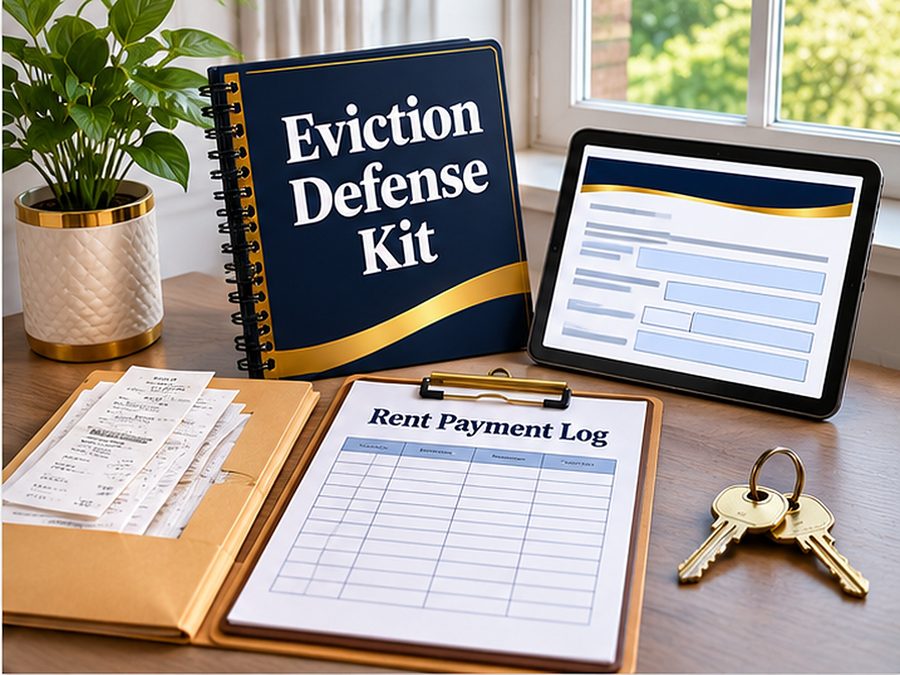
$24 · instant download · 13 fillable PDFs
Buy on EtsyUse this kit if you rent your home and your landlord has given you an eviction notice or filed an eviction case against you.
This kit is not for landlords, commercial leases, or foreclosures. Some public and subsidized housing has extra protections, so tell legal aid if you live in subsidized housing.
The forms are fillable PDFs. Type into each box in the free Adobe Acrobat Reader, save, and print. ReadyPro Se is the first self-help legal tech tool created by J.D.s and attorneys, not tech companies.
Deadlines differ by state and by court. Check the papers you received and your court's rules.
In most states, no. A self-help eviction, such as changing locks, removing your things, or shutting off utilities, is usually illegal. Call the police or legal aid if it happens.
A notice usually comes first. It is not a court order. Use the time to pay, fix the problem, negotiate, or get help, and watch for court papers.
In most states, landlords must keep homes safe and livable, with heat, water, and working basics. Serious problems the landlord ignored can be a defense or reduce what you owe.
An eviction filed because you complained about conditions, contacted an inspector, or joined a tenant group may be illegal retaliation in many states.
It depends on your court. Some require one before the hearing, and others let you respond at the hearing. Your papers or the clerk can tell you.
Some courts let or require tenants to pay rent to the court while a dispute over conditions is decided. Ask the clerk whether your court uses it.
Common ones include improper notice, rent paid or accepted, an incorrect amount, serious repair problems, retaliation, and discrimination.
In many states, yes, through a counterclaim, for example for serious repair problems. Ask legal aid whether your court allows it.
Facing eviction is frightening, and you don’t have to face it alone. Show up, keep your papers, and ask for help early.
Get the Eviction Defense KitJoin Represent Yourself Academy