ReadyPro Se
Home › Security Deposit Recovery Kit
Security Deposit Recovery Kit

How to Get Your Security Deposit Back From a Landlord

Your security deposit is your money. Every state has rules about when and how a landlord must return it, and what the landlord can keep. This kit helps you document your move-out, demand your deposit, and take your landlord to small claims court if needed.

Get the kit on Etsy · $24Join the free community

Do This Before You Move Out

1. Take dated photos and video of every room. 2. Give your landlord a forwarding address in writing. 3. Ask for a move-out inspection if your state allows it. 4. Return all keys and keep proof.

The six stages of your case

Most deposit disputes move through these six stages over one to three months.

  1. Document Your Move-Out. Photograph every room, clean thoroughly, and return the keys with proof.
  2. Give Your Forwarding Address. Send your new address in writing and write your landlord’s deadline in your tracker.
  3. Review the Landlord’s Response. Compare every deduction to your photos, your lease, and the law.
  4. Send a Demand Letter. Demand the exact amount owed by a firm date, and say you will go to small claims court.
  5. File in Small Claims Court. Complete your court’s claim form, pay the fee or ask for a waiver, and serve the landlord.
  6. Win and Collect. Present your photos and timeline, then use court tools if the landlord doesn’t pay.

The golden rule: Give your forwarding address in writing. In many states, the landlord’s deadline to return your deposit depends on it.
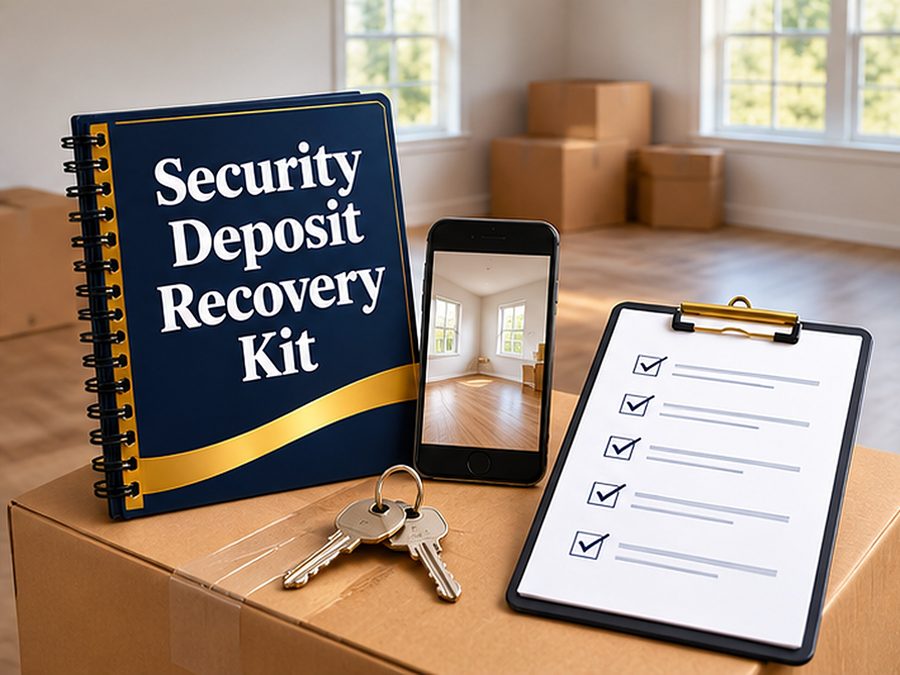
Security Deposit Recovery Kit with fillable court forms

$24 · instant download · 13 fillable PDFs

Buy on Etsy

Is this kit right for you?

Use this kit if you rented a home, moved out or are moving out, and your landlord kept some or all of your security deposit.

This kit is not for landlords or commercial leases. If your landlord also says you owe more than the deposit, the hearing sections help you prepare.

What's included (13 fillable PDFs)

The forms are fillable PDFs. Type into each box in the free Adobe Acrobat Reader, save, and print. ReadyPro Se is the first self-help legal tech tool created by J.D.s and attorneys, not tech companies.

Key deadlines to watch

Deadlines differ by state and by court. Check the papers you received and your court's rules.

Common questions

What is normal wear and tear?

It is the ordinary aging of a home from everyday living, like faded paint, minor scuffs, or worn carpet. Damage from accidents or neglect is different.

What if I didn’t take move-in photos?

Your move-out photos still help. You can also use your move-in checklist, old messages, or witnesses who saw the home.

Why does the forwarding address matter?

In many states, the landlord’s deadline begins when you move out or give an address. Without an address, you may lose some rights.

Does my landlord owe me interest?

Some states and cities require landlords to pay interest on deposits. Check your local rules.

What deductions are usually allowed?

Usually unpaid rent, damage beyond normal wear and tear, and cleaning needed to return the home to its move-in condition. Rules vary by state.

What if the landlord kept my deposit in bad faith?

Some states let tenants recover extra damages, sometimes two or three times the amount wrongly kept. Check your state’s deposit law.

Should I mention penalties?

If your state allows extra damages when a landlord wrongly keeps a deposit, saying so often encourages payment. Only mention penalties your state actually allows.

What if the landlord sold the building?

In many states, the new owner becomes responsible for the deposit. Send your letter to both the old and new owners.

Where to get free help

Your deposit is your money until the landlord proves otherwise. Document everything, put it in writing, and follow through.

Get the Security Deposit Recovery KitJoin Represent Yourself Academy