ReadyPro Se
Home › Small Claims Court Kit
Small Claims Court Kit

How to Sue in Small Claims Court and Collect Your Money

Small claims court is built for people without lawyers. The rules are simpler, the forms are shorter, and cases usually move quickly. This kit walks you through every step, from asking for payment to collecting what the judge awards.

Get the kit on Etsy · $24Join the free community

Before You Start

1. Check that your claim is under your state’s small claims limit. 2. Check the statute of limitations for your type of claim. 3. Find the defendant’s correct legal name and address. 4. Gather every receipt, contract, photo, and message.

The six stages of your case

Most small claims cases move through these six stages over one to three months.

  1. Check Your Claim. Confirm the amount, the deadline to sue, and the right court.
  2. Send a Demand Letter. Ask for a specific amount by a specific date, and keep proof you sent it.
  3. File Your Claim. Complete your court’s claim form, pay the fee or ask for a waiver, and get a hearing date.
  4. Serve the Defendant. Have the papers delivered the way your court allows, then file proof of service.
  5. Prepare and Go to Your Hearing. Organize your exhibits, practice your summary, and arrive early.
  6. Collect Your Judgment. Ask for payment, then use court tools if the other side doesn’t pay.

The golden rule: Ask for payment in writing first. Many courts expect it, and a clear demand letter often gets you paid without going to court.
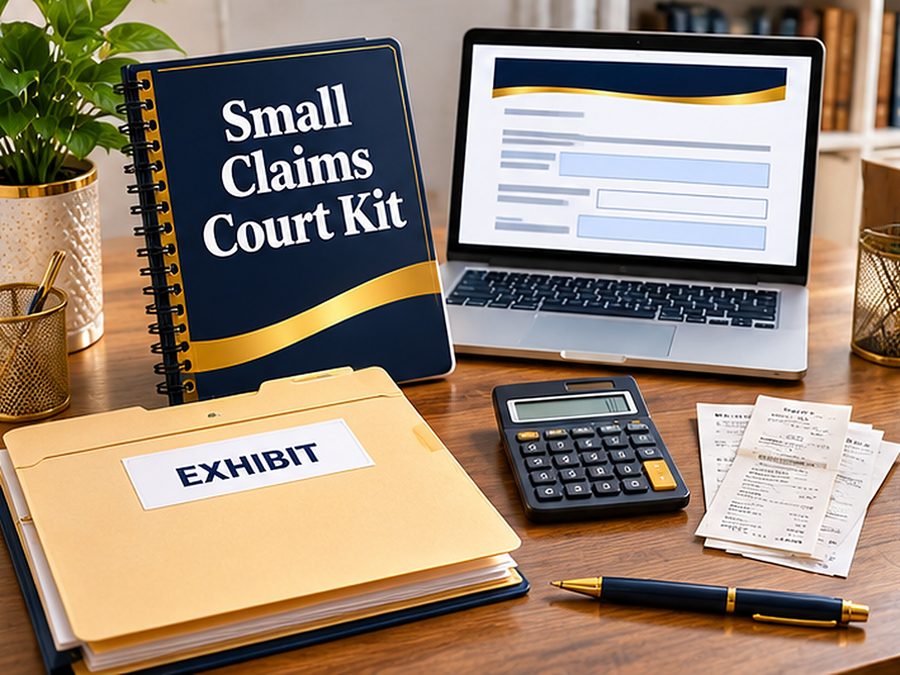
Small Claims Court Kit with fillable court forms

$24 · instant download · 13 fillable PDFs

Buy on Etsy

Is this kit right for you?

Use this kit if someone owes you money, such as a contractor, a business, a former roommate, or a person who damaged your property, and the amount is within your state’s small claims limit.

This kit is not for evictions, divorces, or claims above the small claims limit. If you are being sued in small claims court, the hearing sections still help you prepare.

What's included (13 fillable PDFs)

The forms are fillable PDFs. Type into each box in the free Adobe Acrobat Reader, save, and print. ReadyPro Se is the first self-help legal tech tool created by J.D.s and attorneys, not tech companies.

Key deadlines to watch

Deadlines differ by state and by court. Check the papers you received and your court's rules.

Common questions

What kinds of cases go to small claims court?

Common cases include unpaid loans, bad repair work, property damage, unreturned deposits, and broken agreements, as long as the amount is under the limit.

Can I sue a business?

Yes. Use the business’s exact legal name. Your state’s business search website shows it and lists the registered agent who accepts court papers.

Do I have to send a demand letter?

Some courts and some types of claims require one. Even when it’s optional, it shows the judge you tried to settle and often gets you paid.

What if they offer less?

You can accept, refuse, or counteroffer. Think about the time and cost of court and how likely you are to collect.

Can I add court costs?

Usually, yes. If you win, many courts add your filing and service fees to the judgment.

What if the defendant sues me back?

They may file a counterclaim. Prepare to answer it at the same hearing.

What if I can’t find the defendant?

Ask the clerk about other options. Some courts allow other methods if you show you tried. You may need to ask for a new hearing date.

Do I serve other papers too?

Yes. Anything you file later usually must be sent to the other side, with a certificate of service.

Where to get free help

Small claims court was designed for you. Stay organized, keep it simple, and let your proof tell the story.

Get the Small Claims Court KitJoin Represent Yourself Academy